

German Shepherd: Dog Breed Profile
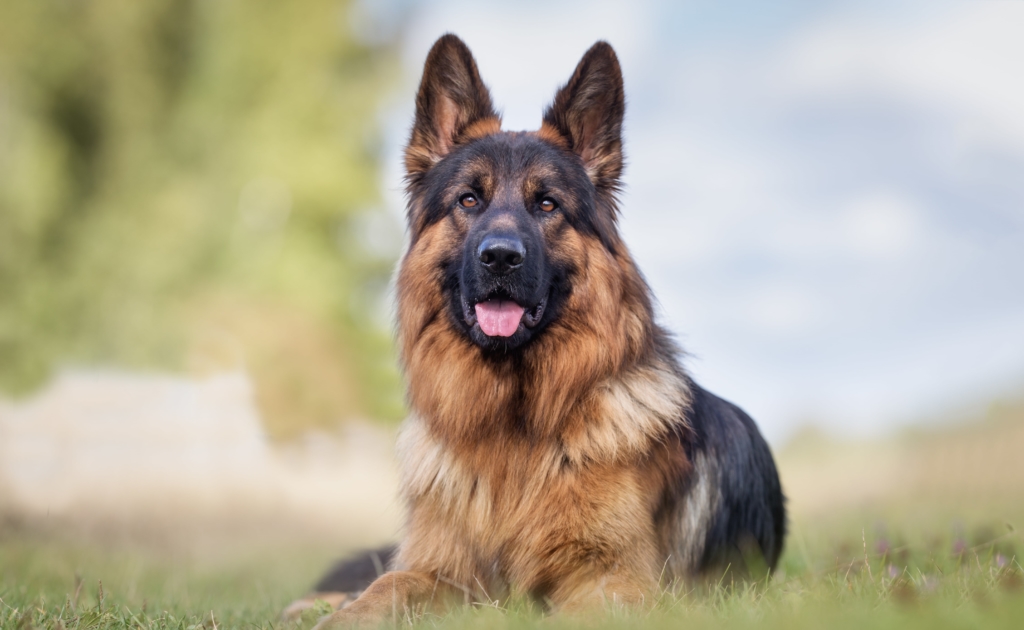
When people talk about a dog being man’s best friend, chances are they are thinking of a German Shepherd. Also known as Alsatians, these big, lovable beasts are well-known for their confident, alert, brave, and loyal temperaments. Their size and trainability make them ideal watchdogs and guide dogs as well as a beloved family pet. Find out more about this remarkable and popular breed.
General Description
German Shepherds fall into the medium to large-sized dogs’ category. Longer than they are tall, a male German Shepherds clock in a height (at the withers) of 60-65 cm, while a female stands at 55-60 cm. A purebred Alsatian is recognisable by its domed forehead, black nose, and long square-cut muzzle with strong jaws. The eyes are typically brown and medium-sized. The ears are large and erect, open at the front and parallel, but will pull back during movement. This breed’s appearance is also characterised by its long neck, which is raised when excited or lowered when moving at a fast pace.
Another distinctive feature of this breed is their double coat, which is close and dense with a thick undercoat. Depending on your German Shepherd’s genes, its coat can be either medium- or long-haired. The colouring of a German Shepherd’s fur can vary between tan/black or red/black with a black “mask” and body markings. Rarer colour combinations include sable, pure black, pure white, silver, and panda markings.
Origin of the German Shepherd
As the name suggests, this breed has its origins in northwest Europe, although it has its genetic roots in the French Berger Picard as well as five Italian breeds. Also true to their name, this breed’s original function was that of a sheep dog, despite that function falling away during the rise of the Industrial Revolution. However, this breed made a resurgence with the establishment of the Society for the German Shepherd Dog and has since grown in popularity as both a pet and working dog.
These days, German shepherds are the top dog in the workforce. They are not only a helping paw on the farm anymore; they also shine as guide dogs, police dogs, and are a vital part of many search and rescue teams.
German Shepherd Temperament And Intelligence
These dogs are renowned for their intelligence. In fact, they’re ranked third in the world, after Border Collies and Poodles. Stanley Coren, author of The Intelligence of Dogs, found that German Shepherds have the ability to learn simple tasks after only five repetitions and obeyed the first command given 95% of the time.
German Shepherds are moderately active dogs that would be quite happy in most backyards. This breed is also described as being very confident, which lends quite nicely to its role in search missions and guarding families. These dogs are also fiercely loyal and protective (or territorial) of their owner or caretaker. Naturally, this means they are alert and responsive, regarding strangers with a healthy amount of wary suspicion – the perfect guard dog. However, early socialisation and training is vital. After all, there is a reason this breed has often been mislabelled as one of the most aggressive dog breeds.
Health
Alsatians are a generally considered a hardy breed and can live up to 13 years. However, the owners of these lovable behemoths do have to budget for a few trips to the vet, especially as their dog begins to age. Most German Shepherd breeders should screen their breeding stock for health problems to minimise the chances of these issues cropping up in their next litter. A responsible breeder must also communicate any issues with you, so you don’t get caught off-guard and can budget for your dog’s care.
Some of the most common health problems in German Shepherds are:
- Hip dysplasia
- Elbow dysplasia
- Bloat
- Epilepsy
- Haemophilia
- Diabetes
- Cateracts
- Degenerative disc disease
- Panosteitis
- Thyroid issues
- Allergies
- Pancreatitis
- Bladder stones
- Urinary tract infections
- Nose infections
- Dental health problems
- Cancer
Image: Adobe Stock / Dyrefotografi.dk
The worst of these conditions can be avoided, however, by taking your Alsatian for regular visits to the vet. Your vet will know to do regular hip and elbow evaluations to prevent the aforementioned dysplasia and offer advice on what foods and activities would best promote your dog’s health.
This is why pet insurance is a must for any pet owner. Illnesses are an unavoidable reality, even for man’s best friend. However, with a trusted pet insurance policy, you can afford to maintain the health of your four-legged friend and give them excellent quality of life in the years to come.